
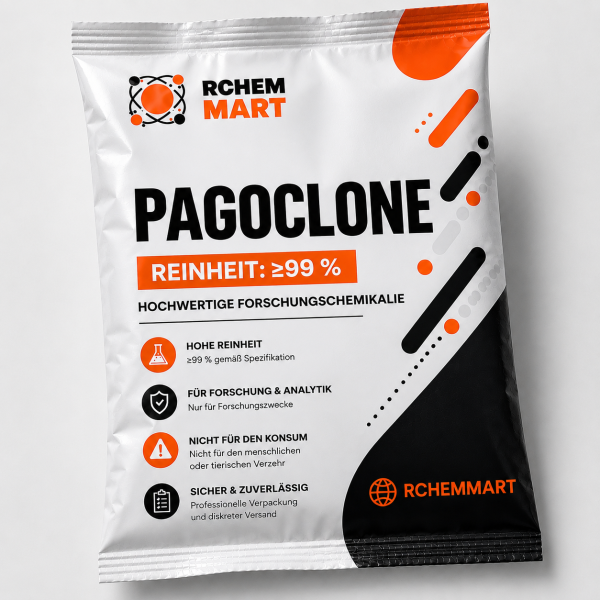
Pagoclone – Research Information and Quality Features
Pagoclone is a chemical compound that can be studied in scientific and analytical research projects due to its specific molecular properties. For laboratory users, the focus is on clear product identification, comprehensible specifications and available quality documentation.
This product page serves to provide factual information for Research, analytical and laboratory uses.
Pagoclone – product information
When assessing: Pagoclone Research laboratories should pay particular attention to clear identification and traceable product data.
Depending on the documentation available, this may include:
- Product name: Pagoclone
- Available amount: 10 mg
- Chemical identification data
- Charge information
- indicated purity or Specifications
- Available analytical documentation
- Safety information
Full product documentation helps laboratory users to evaluate the material according to the requirements of their respective research project.
Quality and analytical documentation
In scientific studies, the traceability of the materials used is an important part of a structured laboratory practice.
In Pagoclone 10 mg In particular, the following information may be relevant:
- Identity of material
- Batch number
- Specifications
- Available purity information
- Test and analysis data
- Certificate of Analysis (CoA), if available
- Safety Data Sheet (SDS) where available
Research laboratories should always compare product claims with the requirements of their respective analytical method and applicable laboratory standards.
Pagoclone in scientific research
Pagoclone can be considered in scientific studies, inter alia, in the following areas:
- analytical chemistry
- Structural and identity investigations
- Laboratory analysis
- Comparative chemical studies
- Scientific documentation
- Instrumental analysis
The specific suitability of a material depends on the research design, the method used and the requirements of the laboratory.
Product information and batch traceability
Clear batch identification facilitates internal documentation and traceability of research materials.
For professional laboratory users, product and batch data can be used, for example, to document:
- Materials used
- Analytical results
- Laboratory stocks
- Comparative studies
- Quality controls
Be helpful.
Safety and handling information
Before working with a chemical material, each available Security information and the SDS are tested.
Storage, handling and disposal should be carried out in accordance with product specifications and applicable laboratory and safety rules.
Pagoclone – research advice
In the case of scientific materials, between Chemical research information and a medical or therapeutic application are clearly distinguished.
RChemMart provides structured information on research chemicals for scientific and analytical purposes. Product information should be checked against specifications and available documentation before use.
Important note
Pagoclone is intended exclusively for permitted scientific research, analysis and laboratory purposes. It is not intended for human or animal consumption, medical, therapeutic or diagnostic uses. Users and facilities are responsible for checking and complying with all legal and regulatory requirements applicable at the respective site prior to acquisition, possession, use, storage and disposal.
Pagoclone – product information
| Characteristics | Information |
|---|---|
| Product name | Pagoclone |
| CAS number | 133737-32-3 |
| Alternative CAS indication | 133737-48-1 |
| Molecules | C23H22ClN3O2 |
| molecular weight | 407,9 g/mol |
| ChEMBL | CHEMBL2104745 |
| PubChem CID | 131664 |
| Product quantity | 10 mg |
| Purity | ≥99 %, if confirmed by the respective batch specification or CoA |



Laura F. –
The product specifications were clearly documented and could be archived for research purposes.
Anna K. –
The sample delivered corresponded to the product specifications provided. The information could be used for internal research documents.
Nina T. –
The product information was complete and supported quality assurance in the research environment.
Katharina B. –
Charge number and product data facilitated internal quality control and traceability.
Dr. Markus L. –
The product was delivered properly packed and was clearly marked. Charge information was available for laboratory documentation.
Sarah V. –
Packaging, labeling, and product documentation supported routine laboratory handling and recordkeeping.
Julia S. –
The material was delivered in good condition and stored in accordance with the laboratory guidelines. The marking was clearly designed.
Stefan W. –
Packing and labelling corresponded to the requirements for safe storage and handling in the laboratory.
Patrick G. –
The material was delivered safely packed and was suitable for storage under standard laboratory conditions.
Michael R. –
The product information provided supported the proper documentation in the laboratory.
Daniel H. –
Delivery was carried out within the expected processing period. The sample was recorded according to the laboratory standards.
Andreas P. –
The sample delivered corresponded to the product description and was documented in accordance with the laboratory procedures.
Tobias M. –
The packaging was undamaged upon receipt. Product and batch data were clearly visible.